 |
 |
 |
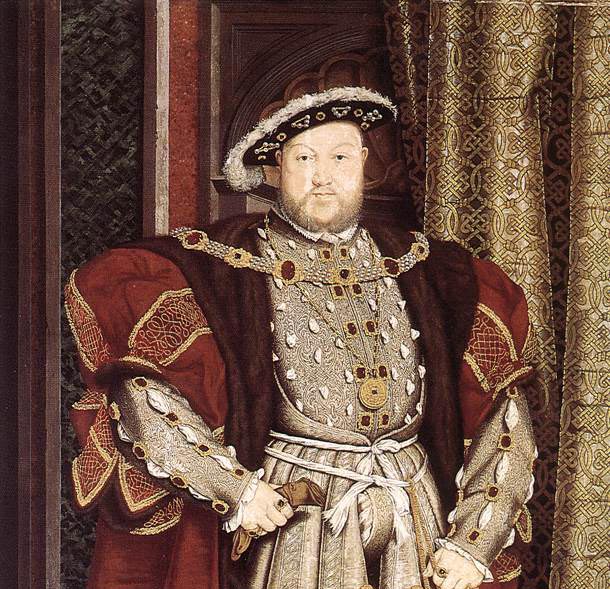
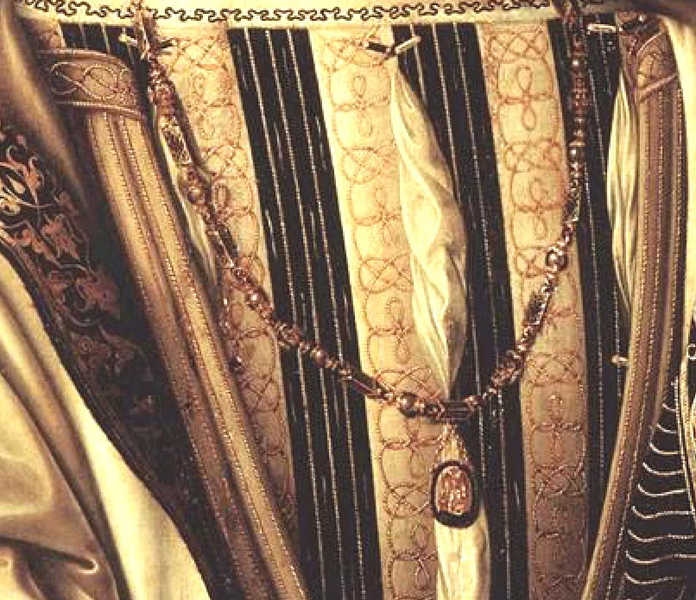
King Henry VIII of England, King Francis I of France
Embellishments Myths
Myth: Only the Irish and Scots use celtic knotwork on their garments. Shiny gold trim is not period.
Knotwork is not for the Celts only. What few images of the Irish or Scots available, or of their surviving garments, do not show any knotwork designs embroidered or otherwise embellished on them. Knotwork is seen in stone engravings of the time in both Ireland and Scotland. However, printers all over the Continent copied pattern books, and knotwork designs are found in surviving German and Italian pattern books, and originally come from the Moorish countries.
Gold threads are created from pure silver that is plated (thin covering) in gold then beaten and drawn into finer and finer forms of wire. Because of the high silver content of the gold, the gold gilt threads will darken over time. But when newly placed as an embroidery on a garment or wall hanging, the gold shines bright, as seen in the paintings above.
Common types of embroidery during the Tudor time:
- Applique (slips)
- Blackwork (aka True Work, or Spanish Work in period terms)
- Whitework (Cutwork)
- Woolwork or crewel
- goldwork ('or nui' and surface couched)
- polychrome (multi-color) silks
No ribbon embroidery as in Victorian styles, although ribbons can be a form of trimming.
And lace was handmade in cords or small strips, as in fingerloop weaving, bobbin work, or cutwork lace. There were no lace fabrics, as is done by modern machines.
King Henry VIII, copy after Holbein, unknown date after 1537.
King Francis I of France, by Jean Clouet, 1525.